Choosing the right shares is one of the most important skills an investor can develop. While stock markets often appear unpredictable, successful long-term investors do not rely on luck, rumours, or short-term market noise. Instead, they use structured analysis, clear criteria, and disciplined decision-making to identify companies with strong fundamentals and sustainable growth potential.
For many beginners, picking shares feels intimidating. With thousands of publicly listed companies, constant news updates, and conflicting opinions, it can be difficult to know where to start. However, selecting the right shares does not require advanced mathematics or insider knowledge. It requires understanding businesses, evaluating financial strength, and aligning investments with personal goals and risk tolerance.
This article provides a comprehensive, step-by-step guide on how to pick the right shares. It focuses on practical principles rather than speculation, helping investors make informed decisions and avoid common mistakes.
Why Picking the Right Shares Matters
Investing in shares is not simply about buying stocks—it is about owning part of a business.
Shares Represent Ownership
When you buy shares, you become a partial owner of a company. Your returns depend on:
- The company’s ability to grow profits
- How well management allocates capital
- Market perception over time
Choosing the right shares means choosing the right businesses.
Long-Term Results Are Driven by Fundamentals
While short-term prices fluctuate due to emotions and news, long-term performance is largely determined by:
- Earnings growth
- Cash flow generation
- Competitive strength
Investors who focus on fundamentals increase their chances of consistent results.
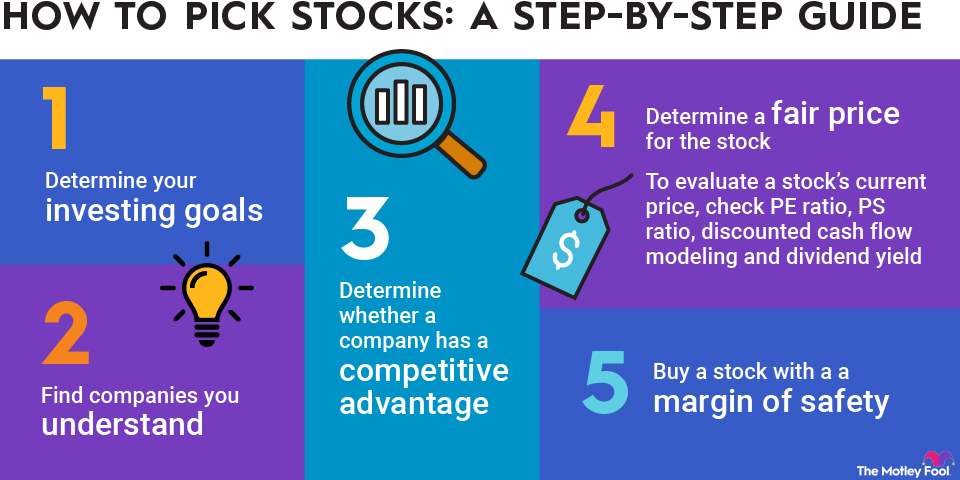
Step 1: Define Your Investment Goals Clearly
Before analysing any shares, clarify your objectives.
Key Questions to Ask Yourself
- Are you investing for long-term growth or income?
- What is your time horizon?
- How much risk can you tolerate?
- Do you need liquidity in the near future?
Your answers determine what type of shares are suitable for you.
Growth vs Income Investing
Growth-focused investors seek companies that reinvest profits to expand operations and increase future earnings.
Income-focused investors prioritise stable companies that pay regular dividends.
There is no universally correct approach—only what fits your goals.
Step 2: Understand the Business Before the Share Price
A common mistake is focusing on share price instead of the business.
Ask Simple but Powerful Questions
- What does the company do?
- How does it make money?
- Who are its customers?
- What problem does it solve?
If you cannot explain the business in simple terms, it may not be a suitable investment.
Competitive Advantage Matters
Strong companies often have durable advantages such as:
- Brand strength
- Cost leadership
- Network effects
- Regulatory protection
These advantages help companies maintain profitability over time.
Step 3: Analyse Financial Statements
Financial statements reveal the true condition of a business.
Income Statement: Profitability
Look for:
- Consistent revenue growth
- Stable or improving profit margins
- Predictable earnings
Avoid companies with erratic or declining profitability unless there is a clear turnaround story.
Balance Sheet: Financial Strength
Key indicators include:
- Reasonable debt levels
- Adequate cash reserves
- Growing shareholders’ equity
Strong balance sheets reduce financial risk, especially during downturns.
Cash Flow Statement: Quality of Earnings
Cash flow confirms whether profits are real.
Positive operating cash flow over time suggests:
- Healthy operations
- Sustainable business model
Profits without cash flow are a warning sign.
Step 4: Use Key Financial Ratios Wisely
Ratios help compare companies objectively.
Valuation Ratios
Common valuation tools include:
- Price-to-earnings (P/E)
- Price-to-book (P/B)
- Price-to-cash-flow
Valuation should always be considered alongside growth and quality.
Profitability Ratios
- Return on equity (ROE)
- Return on invested capital (ROIC)
High and consistent returns indicate efficient use of capital.
Risk and Stability Ratios
- Debt-to-equity
- Interest coverage
Lower financial leverage generally means lower risk.
Step 5: Evaluate Management Quality
Management plays a crucial role in long-term success.
Signs of Strong Management
- Clear communication with shareholders
- Consistent strategy execution
- Prudent capital allocation
- Long-term mindset
Good businesses can fail under poor leadership.
Alignment with Shareholders
Look for:
- Reasonable executive compensation
- Insider ownership
- Transparent decision-making
Alignment reduces conflicts of interest.
Step 6: Consider Industry and Market Context
Even strong companies operate within broader environments.
Industry Trends Matter
Assess whether the industry is:
- Growing, stable, or declining
- Highly competitive or consolidated
- Subject to technological disruption
Investing in a great company within a collapsing industry increases risk.
Economic Sensitivity
Some shares are more sensitive to economic cycles than others. Understanding this helps manage portfolio volatility.
Step 7: Avoid Emotional and Speculative Decisions
Emotion is one of the biggest enemies of investors.
Common Emotional Traps
- Chasing hot stocks
- Panic selling during downturns
- Overconfidence after short-term gains
- Fear of missing out (FOMO)
Disciplined analysis reduces emotional mistakes.
Ignore Market Noise
Daily news and price movements rarely change long-term fundamentals. Focus on business performance, not headlines.
Step 8: Diversification and Portfolio Balance
Even the best analysis cannot eliminate uncertainty.
Why Diversification Matters
Diversification:
- Reduces risk
- Smooths returns
- Protects against unexpected events
Avoid concentrating too heavily in a single share or sector.
Quality Over Quantity
Diversification does not mean owning dozens of random shares. A focused portfolio of high-quality companies is often more effective.
Step 9: Know When a Share Is Too Expensive
A great company can still be a poor investment if the price is too high.
Valuation Discipline
Ask:
- Are growth expectations realistic?
- Is the price justified by fundamentals?
- What assumptions are built into the price?
Overpaying reduces future returns.
Margin of Safety
Buying shares with a margin of safety provides protection against errors and market volatility.
Step 10: Long-Term Holding vs Short-Term Trading
Your approach affects how you pick shares.
Long-Term Investors
Focus on:
- Business quality
- Competitive advantage
- Sustainable earnings
Time is an ally for patient investors.
Short-Term Traders
May prioritise:
- Liquidity
- Volatility
- Technical signals
However, trading requires discipline and risk control.
Step 11: Review and Monitor Your Shares Regularly
Buying a share is not the end of the process.
What to Monitor
- Earnings performance
- Industry changes
- Balance sheet health
- Management actions
Regular reviews help ensure the investment thesis remains valid.
Avoid Overtrading
Frequent buying and selling increases costs and emotional stress. Make changes only when fundamentals change.
Step 12: Learn from Mistakes and Experience
Every investor makes mistakes.
Continuous Improvement
- Review past decisions
- Identify what worked and what did not
- Refine your criteria over time
Experience is one of the most valuable investing assets.
Common Mistakes When Picking Shares
Avoiding common errors improves long-term results.
Frequent Mistakes
- Investing without research
- Following tips blindly
- Ignoring valuation
- Overestimating short-term trends
- Lack of diversification
Awareness is the first step toward prevention.
Building a Simple Share Selection Framework
Consistency is more important than complexity.
A Practical Checklist
- Understand the business
- Check revenue and profit trends
- Assess balance sheet strength
- Confirm cash flow quality
- Evaluate valuation
- Consider industry context
- Decide based on long-term logic
This framework can be applied to any share.
The Role of Patience and Discipline
Successful share selection rewards patience.
Compounding Over Time
High-quality shares held over long periods can deliver significant compounding returns.
Staying Rational During Volatility
Market downturns are inevitable. Discipline helps investors avoid costly emotional reactions.
Final Thoughts: Picking the Right Shares the Smart Way
Picking the right shares is not about predicting the next market move or finding secret information. It is about understanding businesses, applying disciplined analysis, and maintaining a long-term perspective.
The most successful investors:
- Focus on fundamentals, not hype
- Buy quality at reasonable prices
- Diversify intelligently
- Stay patient and disciplined
- Continuously learn and adapt
By following a structured, rational approach, investors can reduce risk, improve decision-making, and increase the likelihood of achieving long-term financial goals. The right shares are not those that move the fastest—but those that grow steadily, sustainably, and responsibly over time.
Word Count:
469
Summary:
A realistic indication of how well you can do and my personal share selection strategy to help you
Keywords:
investing, safe, shares, wealth building, stocks, strategy, selection, performance, improve
Article Body:
This is one of the questions that I�m asked the most and it�s an answer that I like to answer in two ways.
The more technical or objective way to answer it is to compare your performance to something concrete. For example the market average in your own country. For us here in Australia it�s the All Ordinaries index which has returned well over 40% in the last few years and has averaged over 10 percent per year over the last 25 years. If you haven�t made a return of at least this rate then you haven�t performed at a satisfactory level. I know it�s a fairly cold way of looking at things but that�s the facts.
So consider this, it is a well known fact that 70% of fund managers don�t actually beat the market average. However, being an individual investor and not faced with the same constraints you should comfortably be beating this average to consider yourself successful.
How do I beat the average you ask � well there�s a very logical answer to this question. It comes from three very important characteristics of any share.
Firstly, the share should be a leading company within the industry. For example within the top 100 largest companies. Those with a proven track record of success.
Second the share�s price history should exhibit the characteristics of a long term uptrend. When you look at chart of such a company you should see it starting in the bottom left hand corner of the page or screen and finishing in the top right hand corner.
Thirdly the share itself should be outperforming the market average. That makes sense if you want your share portfolio to outperform the market average as well.
If these three criteria are applied to all shares within your portfolio you will be selecting shares that are performing well fundamentally. You will be selecting shares have been moving in an upward direction so it is easier to make money from them. And you will be selecting shares that are already performing better than the average. So logically the shares that you have will be giving you the best possible chance to outperform the market average.
What do you want?
The second way I answer questions on how well people should be doing is by asking them how well they want to be doing. It is always fun to hear people umm and err at this question because they simply don�t know. They don�t know what returns they want so how will they ever know when they�ve achieved what they want. It is much easier to reach a goal if you define it up front. You also know if you are not reaching it and so can do something about it.


Tinggalkan Balasan